

Coachspeak — noun: vague, well-rehearsed non-answers delivered by coaches and general managers to obscure their true feelings and intentions.
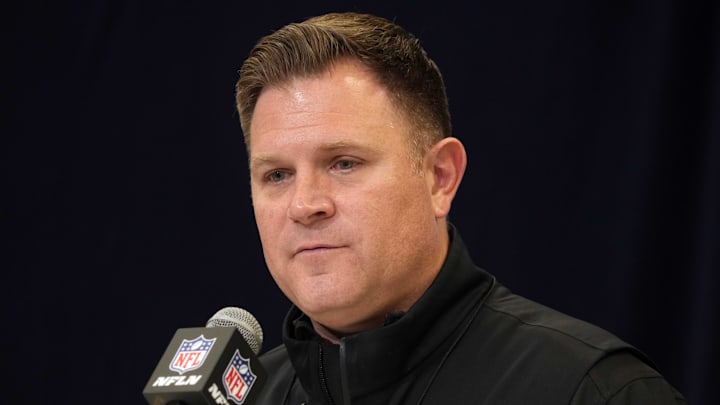
Brian Gutekunst has mastered this art form. Half an hour can pass, Gutekunst delivering hundreds of words yet actually saying nothing.
This was different.
The packaging didn't change. Gutekunst pulled out the classic cliches, including his expectation for every player under contract to return, knowing full well that rarely happens. He even spoke glowingly of the Packers' under-fire cornerbacks.
Yet once you dig a little deeper beneath the coachspeak, his messaging provided some distinctly different flavors than usual. Frustration. Disappointment. Bluntness and, at times, brutal honesty. Gutekunst didn't throw anyone under the bus. That's not his style. He was as polite and charming and upbeat as ever, but his messaging offered insight into his real feelings about where the Packers stand.
Brian Gutekunst gets subtly honest about Packers' failures
"I thought there were some really good things during the season. There were also some major disappointments."
It's rare to hear Gutekunst speak that bluntly. "Major disappointments" is strong.
Gutekunst's classic calm demeanor never changed. He remained positive about the future, but it's clear he understands that the Packers need to change. Even after going all-in and trading for Micah Parsons, the Packers managed just nine victories, losing eight, and falling painfully short of expectations.
He said it how it is. In a Super Bowl year, they didn't even come close.
"We don't run from those expectations ever," Gutekunst said. "We were 9-3-1, and I didn't think we played particularly great football during the season. I thought we had moments. I thought we had an opportunity to round into form there in the second half of the season. Obviously, it didn't work out that way."
He's right. Take away dominant victories in Weeks 1 and 2, and the Packers never truly looked like a championship team. They outscored the Detroit Lions and Washington Commanders by 33 points to start the season 2-0. The offense looked explosive, and the addition of Parsons had elevated the defense to another stratosphere.
Or so it seemed. That was, unfortunately, as good as it got. Green Bay became a team unable to get out of its own way. To get out of first gear. Ultimately, injuries and adversity hit, and the Packers self-imploded, losing their final five games.
Brian Gutekunst believes Packers were 'ready' to win and isn't interested in excuses
"Obviously, we've got to win the games that matter the most in December and January. That's kind of been the tale of the last couple of years. This team's ready to do that and we haven't done that."
It sounds like coachspeak on the surface. Gutekunst talks about the need to get better late in the season, but it's that final line that hits home. He believes this team is "ready to do that."
That implies they underperformed and failed to meet expectations. Despite being teed up on multiple occasions, Gutekunst actively batted away any opportunity to blame injuries. He certainly could've. The Packers entered the playoffs with no Parsons, Tucker Kraft, Zach Tom, Devonte Wyatt, or Elgton Jenkins. Many others missed time at pivotal moments along the way.
Gutekunst didn't just play down the injuries, he flat-out dismissed them as an excuse, even bringing up the Packers' last championship season in 2010. That team had 15 players on injured reserve, while 31 players missed at least one game. They then lost Charles Woodson in the second quarter of the Super Bowl.
The 2010 Packers found a way to overcome injuries. This year's team couldn't. Gutekunst highlighted the need to win when it matters the most.
"In Matt's first five years, we were 25-8 in December and January. I think we're 3-9 the last two years. We're looking at that from a lot of different angles to make sure that we're playing our best football in December and January."
Brian Gutekunst raises two revealing questions about the Packers' accountability
"It's all of us. It's players, it's coaches, it's everybody," Gutekunst said of the Packers' inability to finish games. "We have to be more consistent. For me, there's two things: One, do we have the right people out there that can handle those situations? And then, two, are we doing everything to give them the best chance to succeed?"
Do we have the right people out there, and are we doing everything to give them the best chance to succeed?
That's quite the statement.
The first is a direct question about his roster. Do the Packers have the talent and players with the tough mindset to close out games? And beyond that, are they putting them in the right position to succeed? That's coaching.
Was Gutekunst referring to Matthew Golden's lack of usage? His 84-yard, one-touchdown performance in the playoffs only made his part-time role in the regular season more baffling. How about having Jordan Morgan play a significant part of his season at right guard before finally turning to Anthony Belton? Keisean Nixon, an All-Pro returner, barely featured in that role.
It's impossible to know Gutekunst's true meaning behind his words, but it again highlights the same themes of frustration. He believes this roster had Super Bowl potential, but they didn't deliver on expectations.
Identifying the solution is an important part of the process, and Gutekunst may have later hit on that.
Brian Gutekunst bizarrely discussed 'contract years' for why offensive line struggled
"You know how I feel about versatility," Gutekunst said of the offensive line. "To me, they need to be able to play multiple spots. I don't really care where they think they may be better in. When they're in there, they need to perform."
Gutekunst again refused to make excuses. He received a question about the injuries up front and the need to rotate players at different spots. Morgan played guard but looked far more comfortable at tackle. Elgton Jenkins shifted to center after making two Pro Bowls at left guard. Sean Rhyan struggled at right guard before looking more at home at center.
The offensive line undoubtedly underperformed, and Gutekunst admitted it's an area they "need to be better" in to make a Super Bowl run.
Poor offensive line play derailed the Packers' season in the playoffs. While holding an 18-point halftime lead, Bears defensive coordinator Dennis Allen sold out against the run and sent extra bodies. Green Bay's line couldn't hold up.
After halftime, Josh Jacobs rushed eight times for eight yards. Four of those attempts went for no gain or worse, and only one went longer than two yards (a six-yard gain). The Packers couldn't stay ahead of the sticks and, crucially, were unable to drain the clock.
Why did it go so wrong along the offensive line this season?
"It was a lot of moving parts and we never got off the way we wanted to," Gutekunst said. "We had some young players playing, some guys that had moved positions, some injuries happened and guys were moving around, some players in contract years, so there were a lot of things going on there."
Contract years? It's fascinating that he used that as a reason for the disappointing performances.
What exactly did he mean? Players with expiring contracts usually elevate their play to increase their potential payday. Was Gutekunst implying that the Packers had to start players on contract years? Or that they weren't fully invested? It's hard to know exactly what point he was making, but regardless, using "contract years" as one of the reasons for poor line play is somewhat concerning.
Those players: left tackle Rasheed Walker and guard Sean Rhyan. Would the Packers have been better off starting Jordan Morgan at left tackle and Anthony Belton at right guard from Week 1? It's a fair question.
Crucially, Gutekunst acknowledged the need to improve up front. Walker and Rhyan could depart. So, too, could Elgton Jenkins. He's still under contract, but the Packers can create almost $20 million in cap space by releasing him.
The Packers also face a big decision on Aaron Banks, who failed to impress after landing a $77 million contract in March.
Gutekunst spoke for over half an hour. His tone remained calm and positive, as he always is. Many of his answers were textbook coachspeak. But hidden beneath that were several fascinating insights into his mindset following a brutal and heartbreaking end to the season.
Frustration echoed in his words. He admitted the autopsy of this season is still ongoing, and one that will dive deep into the reasons behind their failure to finish when it mattered most.
Even on a fresh contract extension, the pressure cranks up on Gutekunst and Matt LaFleur this offseason. No first-round pick, limited cap space, but no excuses. Gutekunst made it clear: The expectation is to win a Super Bowl. His words subtly hinted at the urgency required for the Packers to finally break out of their seventh-seed pretender status.
Now, he must turn those frustrated words into actions.
 Add us as a preferred source on Google